

At Risk: Our Historic Places and Your Voice
How a change in Washington could reshape Moore County
Scroll to the bottom for the latest updates. The federal ACHP comment period hasn’t opened yet, but it could at any time. Sign up here to be ready as soon as it does.
There’s a reason the historic towns of Vass and Cameron still look the way they do. When US-1 was widened from two lanes to four, a little-known federal law made sure someone weighed what those towns stood to lose before construction began. That law is Section 106.
What is Section 106?
The National Historic Preservation Act came about in direct response to the post-World War II construction that was occurring across the country. In the 1950’s, a building boom brought new federal infrastructure, including the Interstate Highway System, suburban sprawl, and urban renewal projects. Before its introduction, federal projects could be completed without any insight from the local government or community that would be impacted by the project.
Section 106 gives a voice to local communities. Before breaking ground, a federal agency has to consider how its project affects historic resources (both standing buildings and buried archaeology) and consult with local governments, the State Historic Preservation Office, and affected property owners to reduce the harm.
Here’s what most people misunderstand. When a place is listed on the National Register of Historic Places it is often assumed to be protected for good. In reality, the designation only identifies a place as significant. It is Section 106 that requires that significance be weighed before a federal project can move forward. The designation names what matters while the process gives it teeth. Weaken the process, and a designation remains on paper while losing its practical effect.
It guarantees the people closest to a project a seat at the table before the decisions are made.
What it means for Moore County
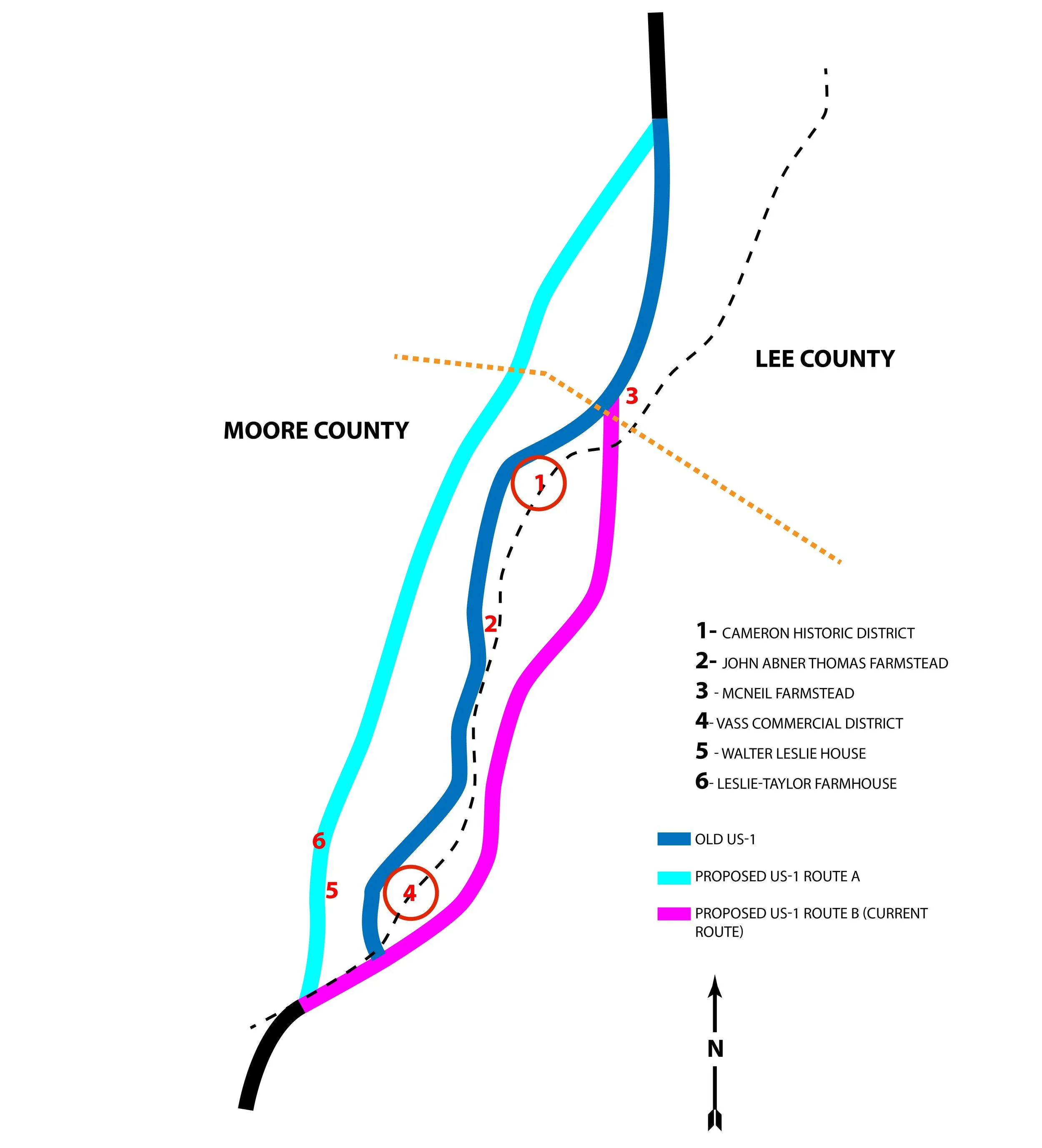
Proposed US-1 routes during 1990 widening study.
Section 106 isn’t abstract. The clearest way to understand what Section 106 protects is a story from our own backyard.
The Farmhouse That's Still Standing
In 1990, the state proposed widening US 1 into four lanes between Cameron and Vass. Before a federally funded project like that can move forward, someone first has to answer one question: is there anything in its path worth protecting? That question is the heart of Section 106.
In Moore County, answering it took real work. The county courthouse burned in 1889, and the records burned with it. Local historians traced old deeds, interviewed families, and walked the land building by building to determine potential impacts. They documented eleven historic places along the route, among them the Leslie-Taylor Farmstead: an 1879 farmhouse with a wide wraparound porch, on land its family had held for over a century.
It sat squarely in the path of one of the proposed routes, and the survey suggested the house and its outbuildings would be lost to the project. But Section 106 required that impact to be named in the open, rather than quietly existing on a drawing somewhere. Today, the farmhouse is still standing.
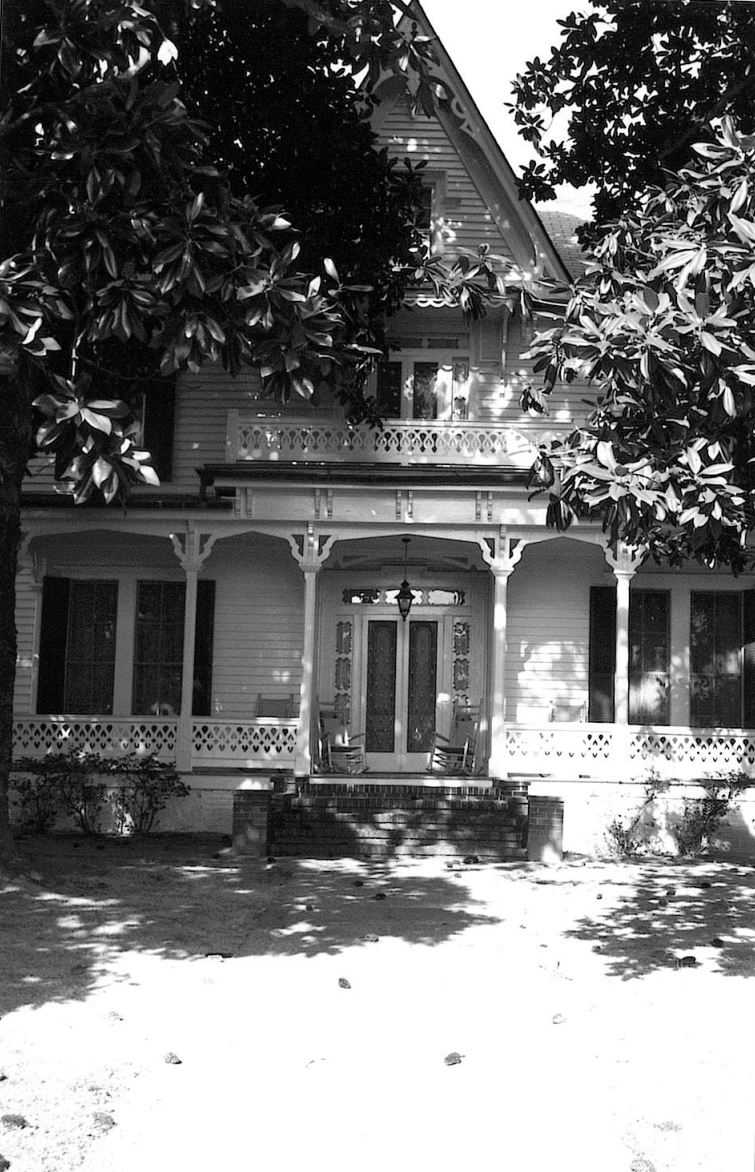
Leslie-Taylor Farmstead from 1990 survey
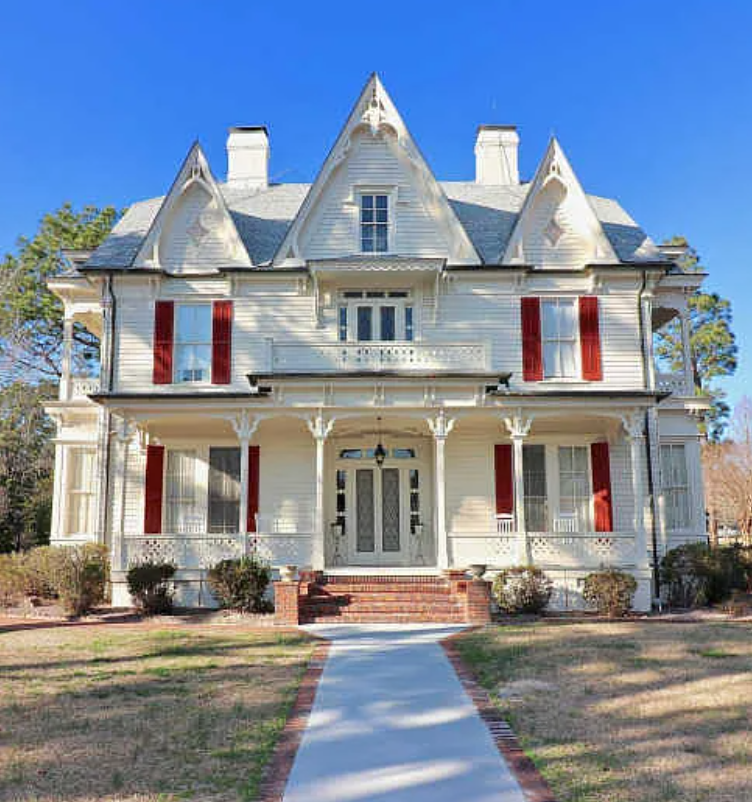
Leslie-Taylor Farmstead today
The two downtowns were never in the plans at all. Routing a four-lane highway through the historic hearts of Cameron or Vass was never a serious option because Section 106 had already required those places to be identified and weighed.
That's the protection most people never see: not only the fights it wins, but the bad options it keeps off the table before anyone ever draws them.
That is exactly what the rewrite puts at risk. Taken to the most extreme interpretation, the outcome could be severe. The designations would remain, but the requirement to honor or even acknowledge them falls away. In this case, a widening through downtown Cameron or Vass would only be inconvenient, not unthinkable. The Leslie-Taylor House still stands because Section 106 required someone to look. Strip that requirement, and the next place in a highway's path may never even be found.
What’s Changing?
The federal rewrite of the Section 106 rules would weaken the process in four ways:
Your seat at the table becomes optional. Agencies could choose whether to consult local, state and tribal governments, and property owners could be left out entirely.
Fewer places, fewer impacts count. The rewrite narrows what's considered. Excluded is a project's effect on the setting of a historic place.
Less warning, less time. Agencies could set and compress their own timelines, making it hard to weigh in even when input is allowed.
Decades of predictable rules, replaced with confusion.
This isn't about one party or administration. It's about whether the people who live here keep their voice in what happens to the places we love.
You can read the redlined version here and the draft here.
Here’s what you can do right now:
Forward this page to a neighbor. The more of us who are paying attention, the stronger our voice.
Be ready to act. The public comment period could open any time. When it does, we need you to move fast.
Watch your inbox. The moment the public comment period opens, we’ll send you a simple, step-by-step way to make sure you are heard. Not signed up for our newsletter? Join here.
This is optional, but it helps. You can reach out to our Governor and members of Congress to express your concern about this rule. Our friends at Cultural Heritage Partners have made this easy by putting together some basic scripts you can find here.
Governor Josh Stein • (919) 814-2000 • Online Contact Form
US Senator Thom Tillis • (919) 856-4630 • Online Contact Form
US Senator Ted Budd • 984-349-5061 • Online Contact Form
US Representative Richard Hudson • (704) 786-1612 • Online Contact Form
Section 106 has protected historic communities across the country for 60 years. There may be room to improve it but not by taking away the local voice that makes it work. The places that make Moore County home are still standing because people had a say. Let's keep it that way.
Updates:
08/28/2026: The Pines Preservation Guild joins a coalition of 600+ organizations signing an open letter to Congress opposing the changes to Section 106. Read the Washington Post Article Here.
08/22/2026: Column in The Pilot Newspaper: Proposed Legislation Change Could Shut Out Public Input